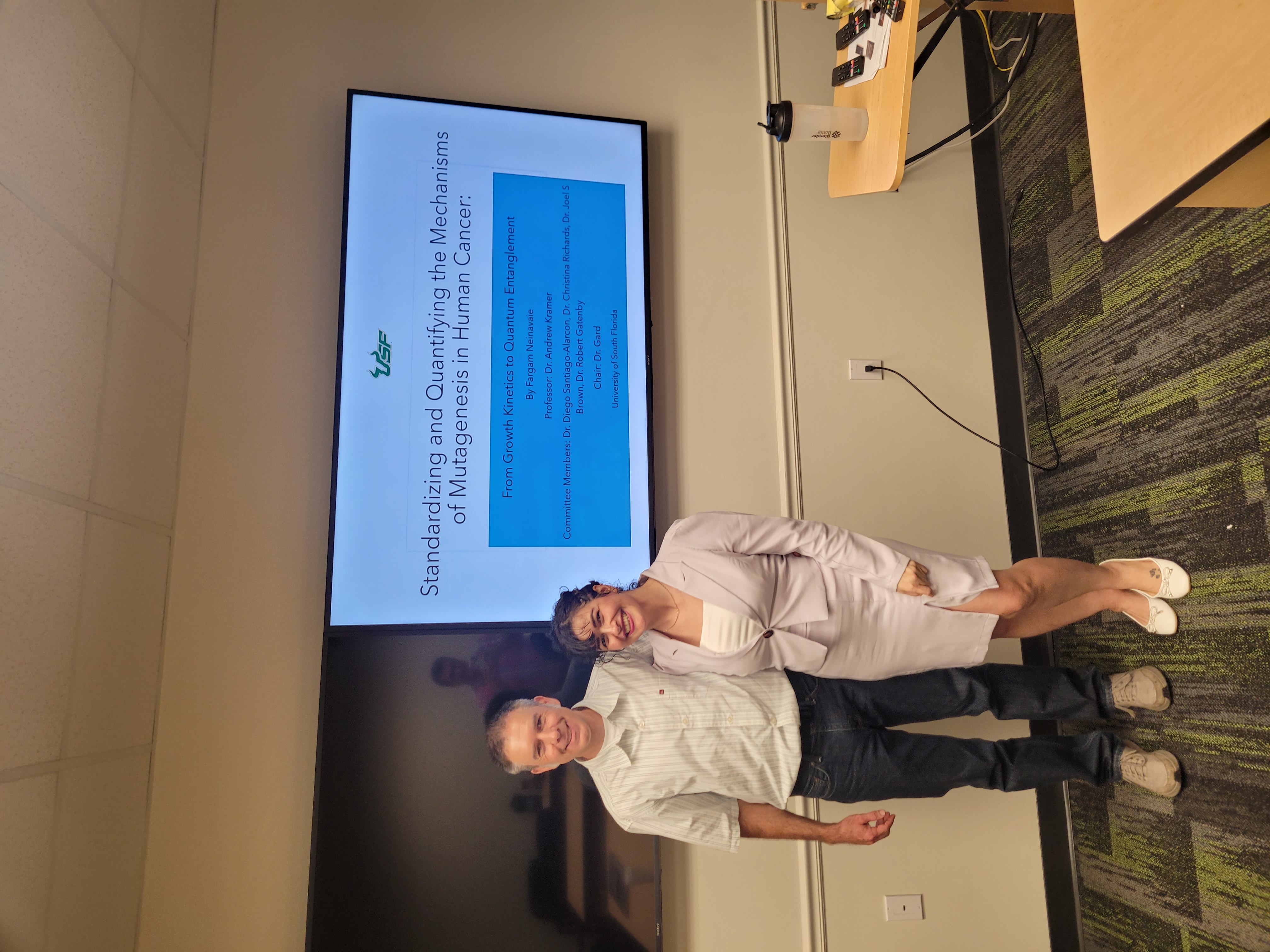
Dr. Fargam Neinavaie has defended her dissertation! A well-deserved milestone based on her creativity and perserverance.
Posts
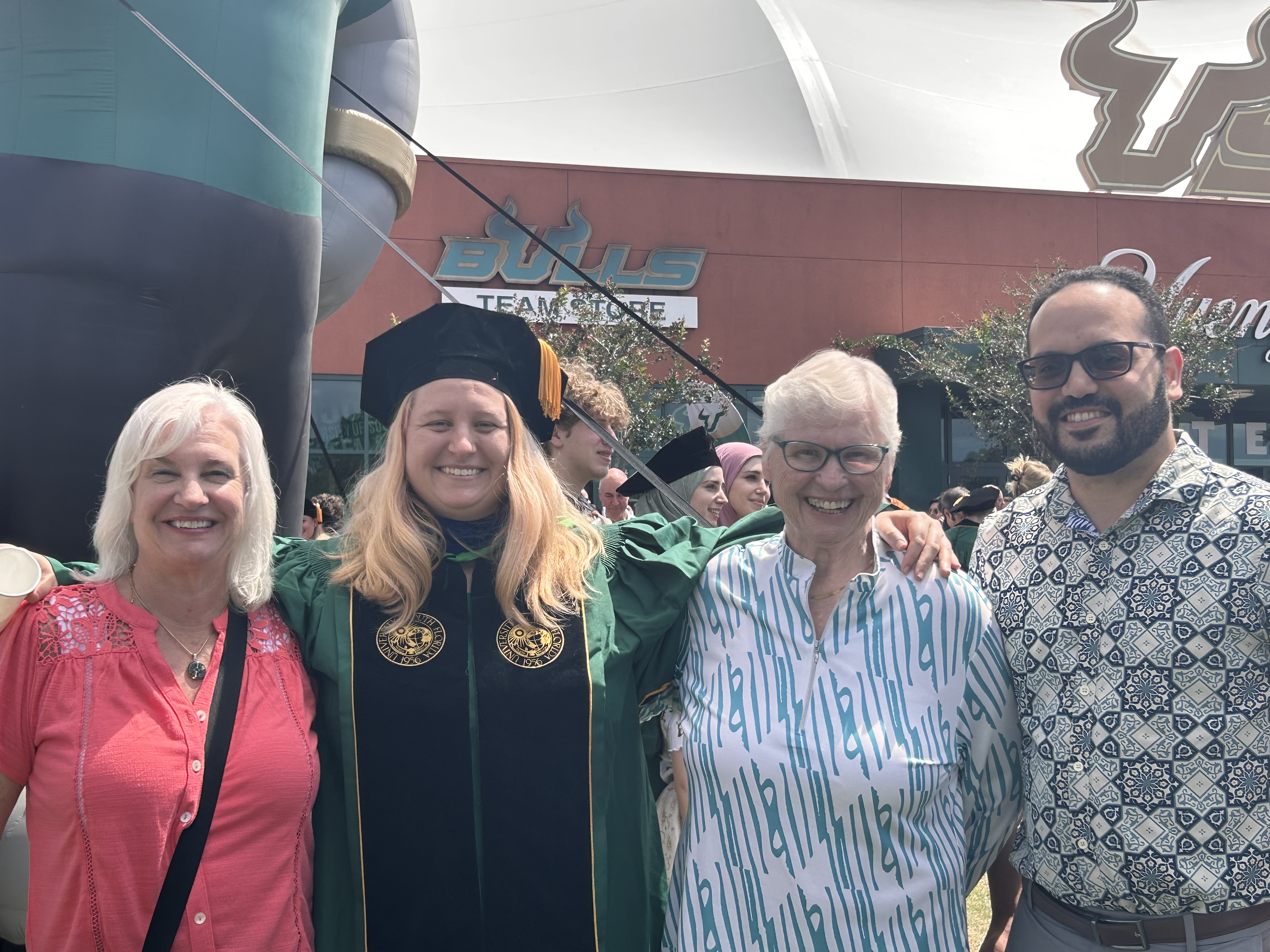
Congratulations Shea!
Shea has successfully earned the title of Dr. Volkel! She is having “fun” navigating job interviews, but hopefully not for long.
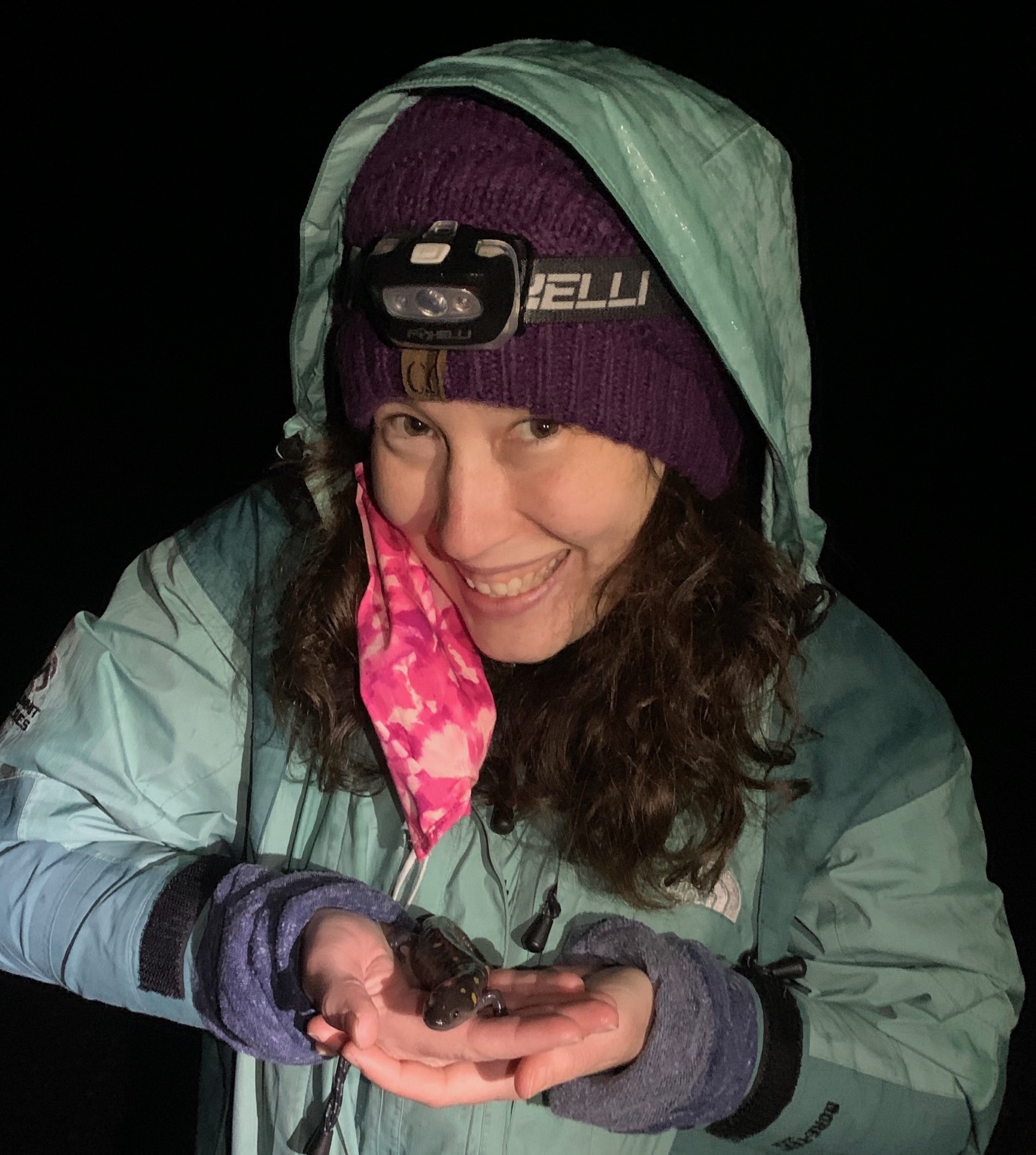
Congratulations to Lauren for her new postdoc position
Dr. Lauren Ash has started a postdoc with the USDA working on spatial ecology of animal diseases. Good luck to Lauren and we will miss her.
Welcome to Hayes Hoover
Hayes has joined the Kramer lab after receiving Masters at Arizona State and Vrije Universiteit Amsterdam. His interests include public health, disease spillover, and mathematical modeling.
Paper exploring multi-scale disease models
A cool collaboration with BatOneHealth, Integrating host condition into spatiotemporal multiscale models improves virus shedding predictions, is now available in Ecography. https://doi.org/10.1002/ecog.07784
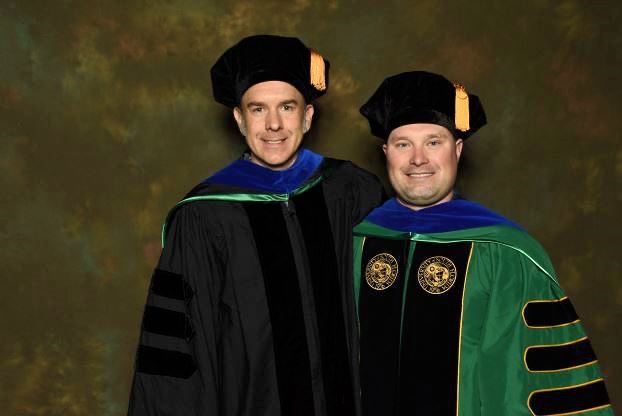
Congratulations to Austin for his new postdoc position
Dr. Austin Smith (Ph.D. 2024) has started a postdoc in the Department of Wildlife Ecology and Conservation at the University of Florida. He is thrilled to be a Gator again.
New paper by Dr. Eva Muir
Eva’s paper, Captive rearing reduces the sensitivity of Acartia tonsa copepods to predator cues, is now available in Journal of Experimental Marine Biology and Ecology. https://doi.org/10.1016/j.jembe.2025.152091
Welcome to Suman Neupane
Suman has joined the Kramer lab after receiving a Masters at Missouri State University. His PhD project will focus on understanding applying quantitative methods to understanding the dynamics of SARS-CoV-2 in wildlife communities.
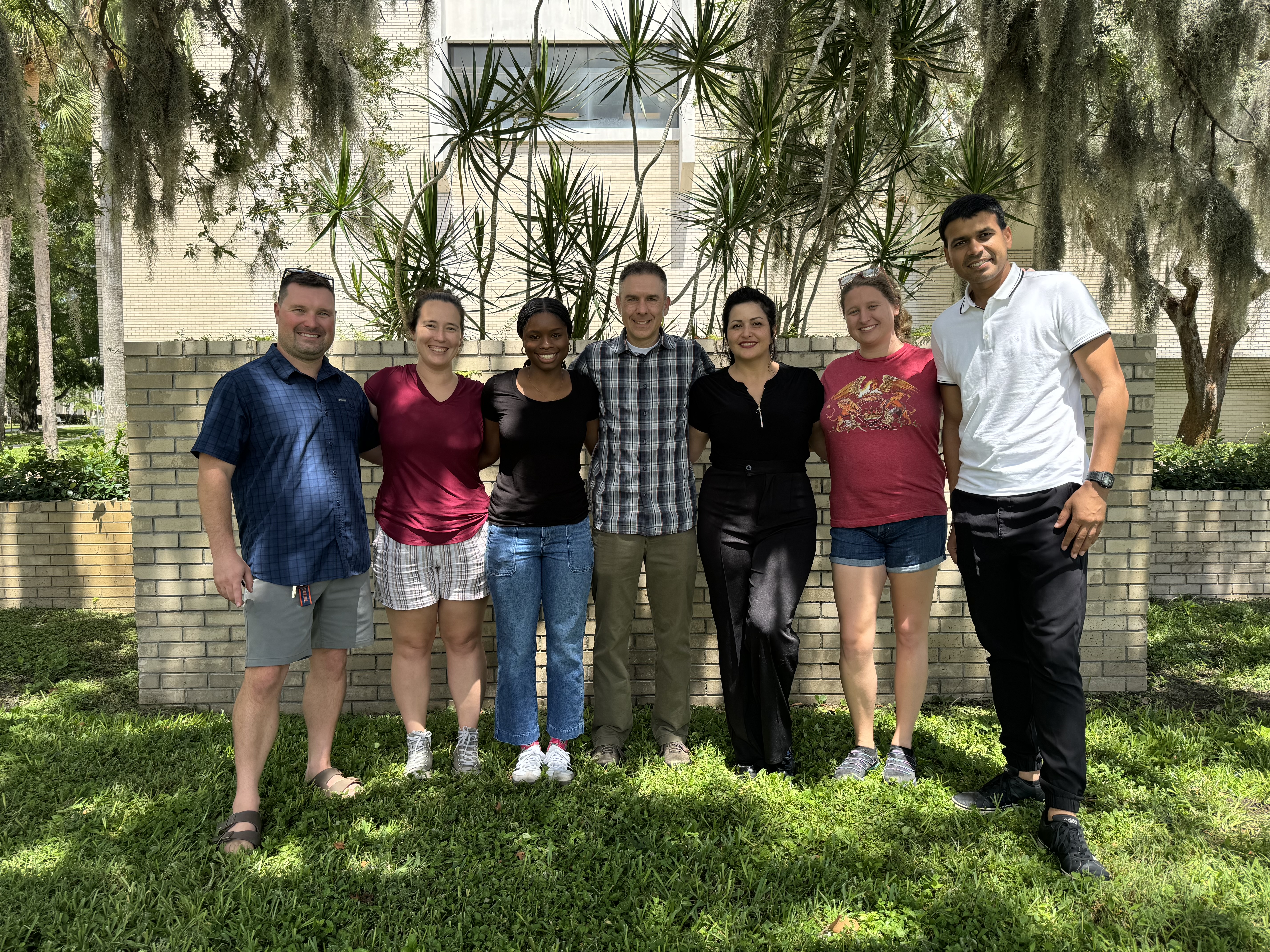
Lab group - summer 2024
Welcome to Dr. Mayank Gangwar and farewell to Gabby Johnson! It has been an excellent summer in the lab. Mayank has joined to work on the transmission dynamics of multi-host zoonotic pathogens. And it was a pleasure to host Gabby, a Swarthmore College senior, as she worked on modeling the species richness of SARS-CoV-2 susceptible mammals.
New paper by Dr. Eva Muir
Eva’s paper, The magnitude of Allee effects varies across Allee mechanisms but not taxonomic groups, is now available in Oikos. https://doi.org/10.1111/oik.10386